
The Loop

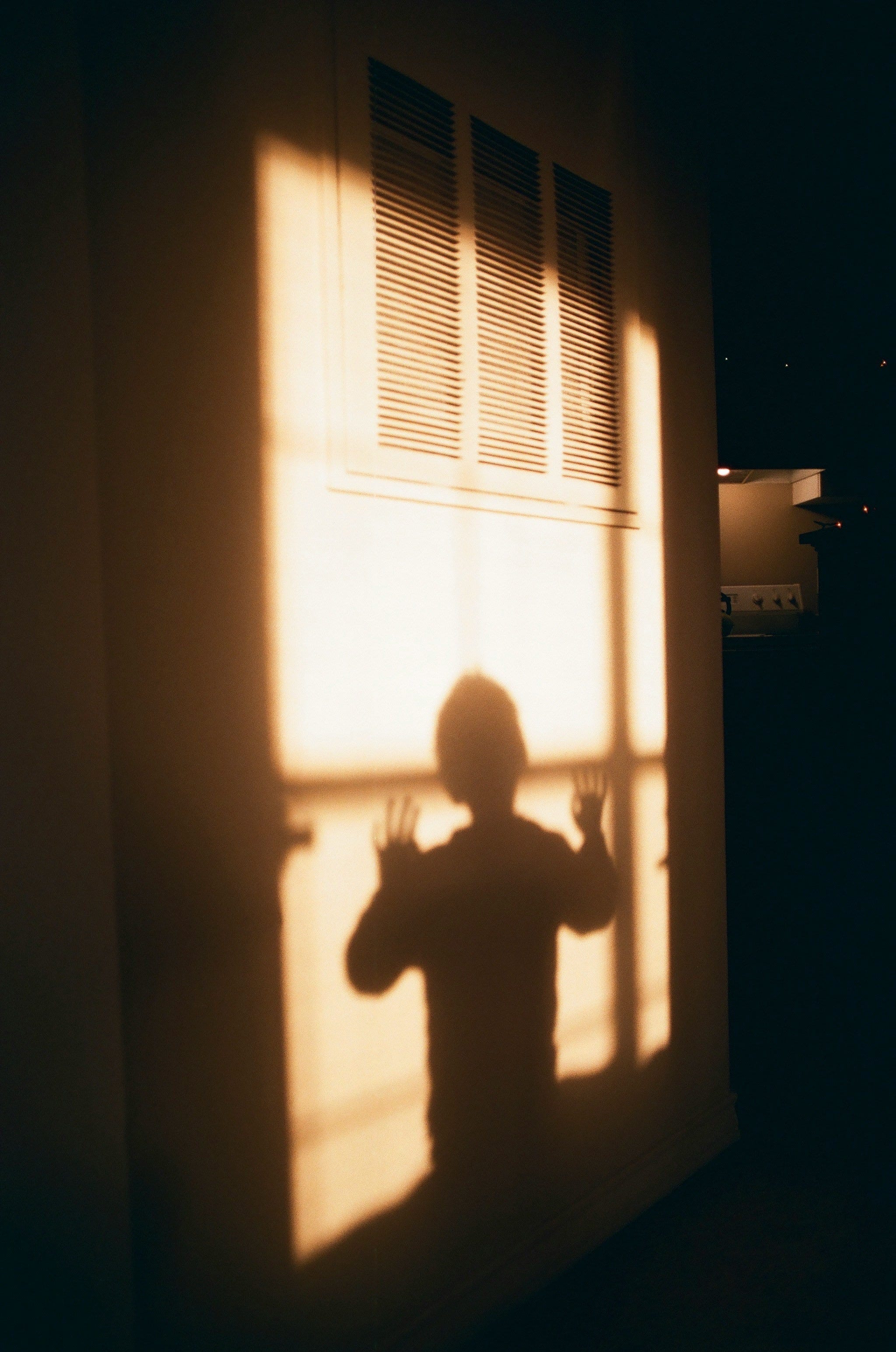
My son started kindergarten at five years old in September. By October, something was already wrong.
It started like it always does in a classroom full of little kids. One by one, they fell. A stomach bug moved through the class like dominoes—kids throwing up at school, getting sent home, parents comparing notes at pickup. It was messy, but normal. Twenty-four hours, maybe forty-eight max. That’s how long it lasted for everyone else.
My son got it too. But, he didn’t stop.
By day two, I wasn’t worried yet. By day three, I was watching. By day four, I knew. This wasn’t normal. He couldn’t keep anything down—water, food, nothing. By the fourth night, there was nothing left in him, and he was still heaving. Just his body trying, over and over, with nothing to give.
We moved into the bathroom. Part of it was practical, I couldn’t handle cleaning it up, and he couldn’t make it to the bathroom in time, but part of it was something else. It was the only place we felt like we had any control. I would sit just outside the bathroom, because I have a serious vomit phobia and couldn’t be right there with him, and he would sit on the floor in front of the toilet, exhausted, waiting for the next wave.
So we distracted.
We counted tiles. We practiced multiplication facts. We spelled words that were way too hard for his age. We played Mad Libs on my phone and made the dumbest stories we could think of just to keep his mind somewhere else. It became our system. It was the only way I knew how to help him.
My husband thought I was making it worse. He said letting him camp out in the bathroom like that was causing it, that I was feeding into it, that I was overreacting. But he wasn’t the one sitting up all night with him. He would sleep. I would stay awake, listening, waiting, trying to stay one step ahead of it.
By the fourth night, I knew something was wrong.
I started asking the other moms. How long did it last for your kids? Twenty-four hours. Maybe forty-eight. Back to school right after. We were going into day five.
He had dark circles under his eyes. His body looked hollow. He cried because he was so uncomfortable, but even that sounded weak. I looked at my husband and said, “Something’s not right.”
He didn’t agree.
He didn’t believe in hospitals, not after what doctors had done to him, and I understood that. I really did. But this wasn’t about him. I carried my child to the car because he was too weak to walk. I carried him into the hospital. And within two hours, they told me what I already knew…he was severely dehydrated.
They hooked him up to an IV, ran fluids and anti nausea medication through his veins, and just like that, he perked up. Popsicle in his hand. Color coming back into his face. Relief.
But no answers.
It happened again a few months later, this time with the flu. Not just one strain, he had both. Influenza A and B at the same time. And again, the vomiting didn’t stop. Again, I didn’t wait. And again, my husband thought I was overreacting.
But I took him anyway.
And again, they admitted him.
That was the night everything stacked on top of itself. I was sitting in the hospital room with my oldest, already admitted, hooked up to an IV, when I got a call that my youngest had been taken to the emergency room. He had gotten sick too. His fever had spiked so high that his eyes wouldn’t focus, and his grandma said she had never seen a child look like that before. She was scared enough to take him in immediately.
Both of my kids were in the hospital at the same time.
I remember sitting there, trying to process it, feeling like I had split in half. One child in front of me, another one somewhere else in the same building, and no way to be in both places at once.
That was one of the worst nights of my life.
My youngest was sent home. My oldest stayed.
That became our pattern.
My husband would question me. I would go anyway. And I would be right. Every time. There was a part of me that hated that. I didn’t need to be right, but I needed him to trust me. Instead, it became this standoff between us. Like I was breaking some unspoken rule every time I made the call.
But I was always going to choose my child.
Always.
By the third time, I didn’t ask permission. We were out of town for a wedding when it hit. A hotel room, a long night, a four-hour drive home with a sick child and a bucket in the backseat. I made the decision before we even pulled into the driveway. If this doesn’t stop by the time we get home, we’re going in. I knew that he would dehydrate within eight hours at that point.
It didn’t stop.
So, we went.
They admitted him again. We stayed another entire week.
That was the stay where everything changed. They ran everything: upper GI, lower GI, bloodwork, ultrasounds and tests I couldn’t even pronounce. Nothing. Every single test came back normal.
Except my child wasn’t.
That’s when they gave it a name: cyclic vomiting syndrome. Basically, my son was getting migraines in his stomach. A virus would trigger it, his body would respond, and he would vomit until it stopped. For him, it didn’t stop on its own. IV intervention of fluids and strong anti nausea meds was the only thing that interrupted the cycle.
It stopped when I took him to the hospital.
That became our life. At home I had abort medication. Zofran and suppositories when he couldn’t keep anything down. IV intervention at the hospital when the abort meds didn’t work. Six hospitalizations in four years.
As he got older, I learned how to live inside it. Toward the tail end of those hospital stays, when he was finally stable and sleeping more, I would bring something to do with my hands. I started making blankets and small quilts, anything that kept me grounded while I sat there waiting for his body to settle down again. It wasn’t about productivity. It was about surviving the waiting.
But something else was happening underneath all of it.
By first grade, my son was different. He started saying he didn’t feel good a lot, but then he’d be fine. Fine, fine, fine… until he wasn’t. He started washing his hands constantly, to the point where his skin cracked. We had told him washing his hands would keep him from picking up viruses, so he tried to control it.
That’s what kids do when their bodies betray them.
They try to find a way to make it stop.
As he got older, the sickness didn’t always come first.
The fear did.
There was a stretch where he stayed up for fifty-three nights in a row. Fifty-three. And I know that because I stayed up fifty-three nights with him.
Getting him to school became a full ordeal. Every morning felt like a negotiation. I would finally get him there, walk him in or hand him off, and drive away while he cried. And two or three hours later, the phone would ring.
“Can you come get him?”
Their school was small. They didn’t even have a nurse. The principal was everything—teacher, administrator, caretaker. They couldn’t manage it, and he knew that. He knew if he said he didn’t feel good, they would call me.
So I would go get him.
Again.
And again.
And again.
He was exhausted. The fear of everything was exhausting him. The anticipation of being sick, the constant monitoring of his own body, the lack of sleep, the lack of food…it was all catching up to him.
And I didn’t understand it.
Not fully.
So I tried to fix it the only way I knew how.
And sometimes, I lost my patience.
I remember him asking me once, “What do you want me to do?”
And I said, “I want you to be normal. Just be a normal kid. Go to school. Get through the day. Stop telling yourself you’re sick when you’re not. You’re fine.”
Even as I said it, something in me knew it wasn’t that simple.
But I didn’t know what else to do.
I would take him out to eat, thinking maybe if he chose the food himself it would help. He would order, sit there, wait for it to come, and the second they put the plate in front of him, his appetite would disappear. Completely. He couldn’t eat.
It happened over and over again.
I never forced him. I knew that would make it worse. But watching your child not eat, not sleep, not feel safe in his own body…it wears you down.
By the time 2020 came, I thought I understood what we were dealing with.
I didn’t.
When everything shut down and school went online, I actually felt relief. I thought this might help him. He would be home, safe, comfortable. Maybe this would fix it.
And then one night, it happened again.
Except it didn’t look the same.
He wasn’t throwing up yet. He just felt like he was going to, and he couldn’t come down from it. I tried everything. Abort medications, grounding him, taking him outside, having him name what he could see, hear, feel. I tried to pull him back.
Nothing worked.
He stood there, panicked, completely disconnected, and said he felt like he wasn’t in his body.
And I realized, in that moment, this was bigger than anything I had the skill set to understand.
My husband looked at him like he was just acting, like he was being dramatic. And I remember thinking, no, this is not normal. Kids don’t just do this for no reason. Not like this. Not when there’s nothing even triggering it.
He was home. He was safe.
And he still couldn’t come back to himself.
So I took him in.
They gave him Ativan to calm him, and instead he started hallucinating. What a nightmare. He was talking about things that weren’t there. I didn’t even recognize him.
When they told me they were going to call the GI doctor, I said no. We had been down that road a hundred times.
“I want a psychiatrist.”
They told me it would have to wait until morning.
I said no.
“This is a hospital. Find me one. I’m not leaving until he’s bee seen by a psychiatrist.”
An hour later, they found one. She evaluated him, but, wanted to see him again the next morning.
I’m forever grateful to this woman. Everything changed because she cared. We finally had a name.
Severe anxiety disorder.
We had been living in a loop. At first, the viruses triggered the episodes. Then the fear of the episodes started triggering the episodes. His body wasn’t just reacting anymore.
His mind was driving it.
They started him on anti anxiety medication, and within thirty days, I got my child back. He ate again. He slept again. He joined sports. He made friends.
He started becoming himself again.
He’s seventeen now. He hasn’t had an episode since that night in 2020. He’s even starting to come off the medication completely. Tapering down...finally.
And he’s okay.
For years, I thought I was fighting a physical illness.
I wasn’t.
I was fighting something I couldn’t see.
And the hardest part wasn’t the hospital stays or the nights on the bathroom floor.
It was realizing that I couldn’t protect my child from his own mind.
But we found our way through it.
And that counts for something.
If this landed with you at all and you would like to help support my work, you may do so here: Buy Me A Coffee
wow Rachael that's a lot. I'm so sorry you And your son went through this. it's amazing what our minds can do to us and we don't even know it's happening. thanks for sharing your story. can't wait to hear more!
Rachel, I sincerely apologize. You were a guiding light for your child. Thank God you trusted your instincts and persisted. Your journey was filled with anxiety for both of you. I must admit, I was deeply upset reading about your little boy suffering physically and mentally. Yes, I cried because children are helpless. All they can do is express that they're unwell, and ultimately, it's in God’s hands. 🙏😢