
Under Pressure

After leaving the restaurant, I told myself I was building something new because I finally had the time to do it. That’s how I made it make sense. My oldest was sick in ways that made life unpredictable, my youngest was still little, and for the first time in years I wasn’t running out the door to seventy-hour weeks. I was home, at least in pieces, and I started trying to build something that could exist inside that reality. Something I could do between school hours that didn’t always happen, naps that didn’t always last, dinner, baths, bedtime, and everything else that fills a day when you are the one holding most of it together.
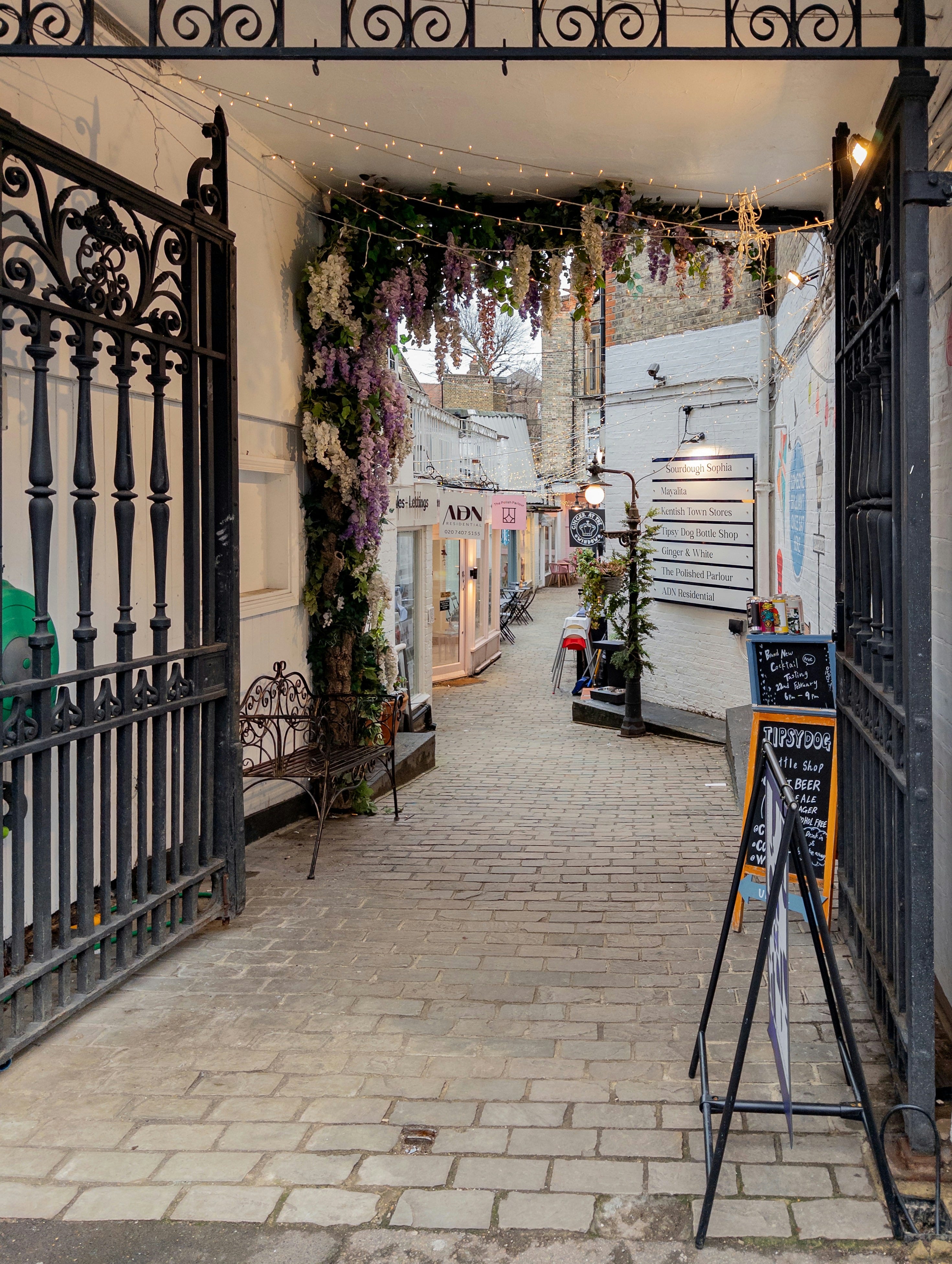
I found the booth by accident. I had gone into one of those small downtown shops in an upscale suburb, the kind with carefully arranged displays and things that look expensive even if you don’t check the tag. I wasn’t there to buy anything. I was there to look, to try to understand what people were doing and whether what I had been making even fit anywhere outside of my own house. The owner happened to be working that day, so I started asking questions. What is this? How does this work? Why does everything feel so intentional? She explained the vendor booths, how each space belonged to someone different, how everyone stocked their own pieces and created their own look inside the store. I didn’t even know that was a thing. And the second she said it, something in me lit right up. I asked if she had any openings, she said one was coming up the next month, and before I could overthink it, I put the deposit down right there.
At that point I was still sewing a lot, mostly children’s things, because sewing fit into a life that was constantly interrupted. You could pick it up and put it down without losing your place. But it didn’t hold me. The more I paid attention to what was happening in that store, the more I realized I was being pulled somewhere else. Every booth had a point of view. Some were filled with untouched antiques, original pieces that meant something to people who understood them. Others leaned into a very specific aesthetic, painted furniture, soft colors, curated looks that were beautiful but didn’t feel like me. I started to understand that people weren’t just buying things. They were buying how someone saw a space. I didn’t know what my style was yet, but I knew I wanted one, and without really deciding to, I started shifting away from sewing and toward furniture. Bigger pieces. Heavier pieces. Things that required more vision than just fabric and thread.
The problem was, furniture needed to be fixed, and I couldn’t fix it. But, my husband could. Back then I wasn’t buying nice pieces. I was dragging home whatever I could find, curbside furniture with broken legs, missing drawers, things most people would have left there. I could see what they could become, and I could make them look good once they were solid, but I couldn’t get them there on my own. He could look at something broken and know almost immediately how to repair it. Something that would have taken me hours and still looked terrible, he could fix in thirty minutes so cleanly you’d never know anything had ever been wrong with it. He really was that good. But once he fixed something, he had opinions about it. What it should look like, what color it should be, how it should be finished. And I didn’t want that, because in my mind this was mine. He was helping me, but helping and leading are not the same thing. That distinction mattered to me more than it did to him. There was tension in that, even when it stayed under the surface.
There were also things I wasn’t allowed to do. Saws were one of them. I wasn’t taught how to use them. I wasn’t shown. I was just told no, that they were dangerous and I’d cut my fingers off. So if I needed wood cut for a sign or a board trimmed for a piece, I had to wait. Which meant the speed at which I could build anything depended on him showing up for it. And he didn’t always, because his work didn’t have structure the way mine had before. He was a subcontractor, which meant he set his own hours. Some days he went in early and stayed all day. Some days he went for a couple hours. Some days he didn’t go at all. If his back hurt, he stayed home. If he didn’t feel like going, he didn’t go. At first it didn’t seem like a problem. Then I started noticing he was home more. On the couch more. Sleeping more. Going in less. There wasn’t a moment where he said he quit. It didn’t happen like that. He just stopped going as often, and then less, and then barely at all.
And underneath everything I was building, something else started building too. We needed that income. I was home, but not in a way that guaranteed anything. I was trying to create something that could eventually support us, but it wasn’t there yet. Not even close. And going back to the bar wasn’t as simple as it had once been. At thirty-seven I could walk into a bar and look like I belonged there. After two kids, a few years out, getting closer to my mid-forties, I didn’t know how long that window stayed open. I would have gone back if I had to, but I also knew it wouldn’t be as easy as it used to be. So this thing I was building wasn’t just something I liked. It was something I needed to work.
The way he told it, everything changed over a door. Although he worked as a subcontractor, the job payed hourly. He was working at a huge mansion that was being restored. Not only that, but, this woman also owned several other “restoration” mansions, so, good work had the possibility of lasting years. This woman had money and very specific taste and wanted something made a certain way. He made it. She didn’t like it. He redid it. Still wrong. Again. Again. He said he kept adjusting it, trying to get it right, until it stopped feeling like real work to him. He said they were patronizing him, keeping him busy on purpose. Maybe they were. Maybe they weren’t. I wasn’t there. All I could see was that it was good money and there was more work behind it, the kind of opportunity you don’t walk away from when everything else feels uncertain. But he didn’t leave in a clear way. He just faded out of it.
I didn’t fully understand that until the day a man walked into the shop asking if I worked there, loud enough that people turned to look. He didn’t lower his voice or pull me aside. He just said it, right there, that my husband had walked off the job and left thousands of dollars’ worth of tools behind and asked if he wanted them back. I remember standing there trying to process it in real time, because none of it matched what I thought I knew. When I got home, I asked. He didn’t hesitate. Said it wasn’t true. Said he didn’t leave anything. And just like that, I had two completely different versions of the same story and no way to know which one was real.
That was the first time something didn’t line up. Not in a way I could prove. Not in a way I could explain. Just enough to sit in the back of my mind while everything else kept moving. The kids still needed me. The house still needed to run. The booth still needed to be restocked. I kept painting, kept waiting for boards to be cut, kept trying to build something that could hold under the weight of all of it. But underneath it, there was a constant pressure that didn’t let up. What if this doesn’t work? What if he stops working completely? What if I can’t build this fast enough? What happens if everything falls back on me again? That feeling didn’t show up all at once. It built slowly, until I could feel it in everything I was doing. I wasn’t just building something because I wanted to anymore. I was building it because I knew that I had to, and I didn’t know what would happen if it didn’t hold.
If you would like to support my work, you may do so here: Buy Me A Coffee
This really drew me in. What comes through so strongly is that this is not only a story about building a business, it is a story about trying to build stability inside a life that is already carrying too much uncertainty.
I was especially struck by the slow shift in the piece, how something that begins with creativity and possibility gradually fills with pressure and unease. That feels very true to life. We tell ourselves we are making something new, and often we are, but underneath that there can also be fear, necessity, and the growing knowledge that too much may end up resting on it.
The booth is such a strong image because it holds both things at once. It is excitement, instinct, possibility, but also the beginning of a burden you can already feel gathering in the background. I really liked the way you describe being lit up by the idea before you even had time to overthink it. That made the whole beginning feel alive.
I also thought the section about your husband was very well done because it stays with what it felt like rather than trying to force certainty. The tension around help versus control, what you were allowed to do and not allowed to do, and then that slow dawning sense that things were no longer lining up, all of that is handled so carefully. It lets the reader feel the instability as it emerges.
What stayed with me most, though, was the ending. That movement from wanting something to needing it to hold carries so much weight. By then the furniture, the booth, the painting, all of it feels like more than work. It feels like an attempt to build a structure strong enough to carry a family when everything else is becoming unreliable.
This feels vivid, layered, and very human. It captures that particular kind of pressure so well, the kind that builds quietly while the ordinary tasks of life keep going around it.
I hate being dependent on a man.
That would very much irk me as well if they thought they could have input in the end product.
Nope, they need to stay in their lane!
Did you end up learning how to use the saw?